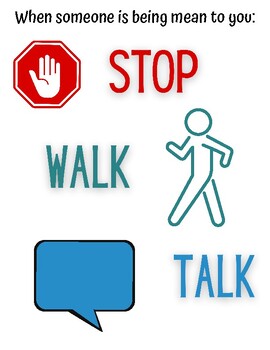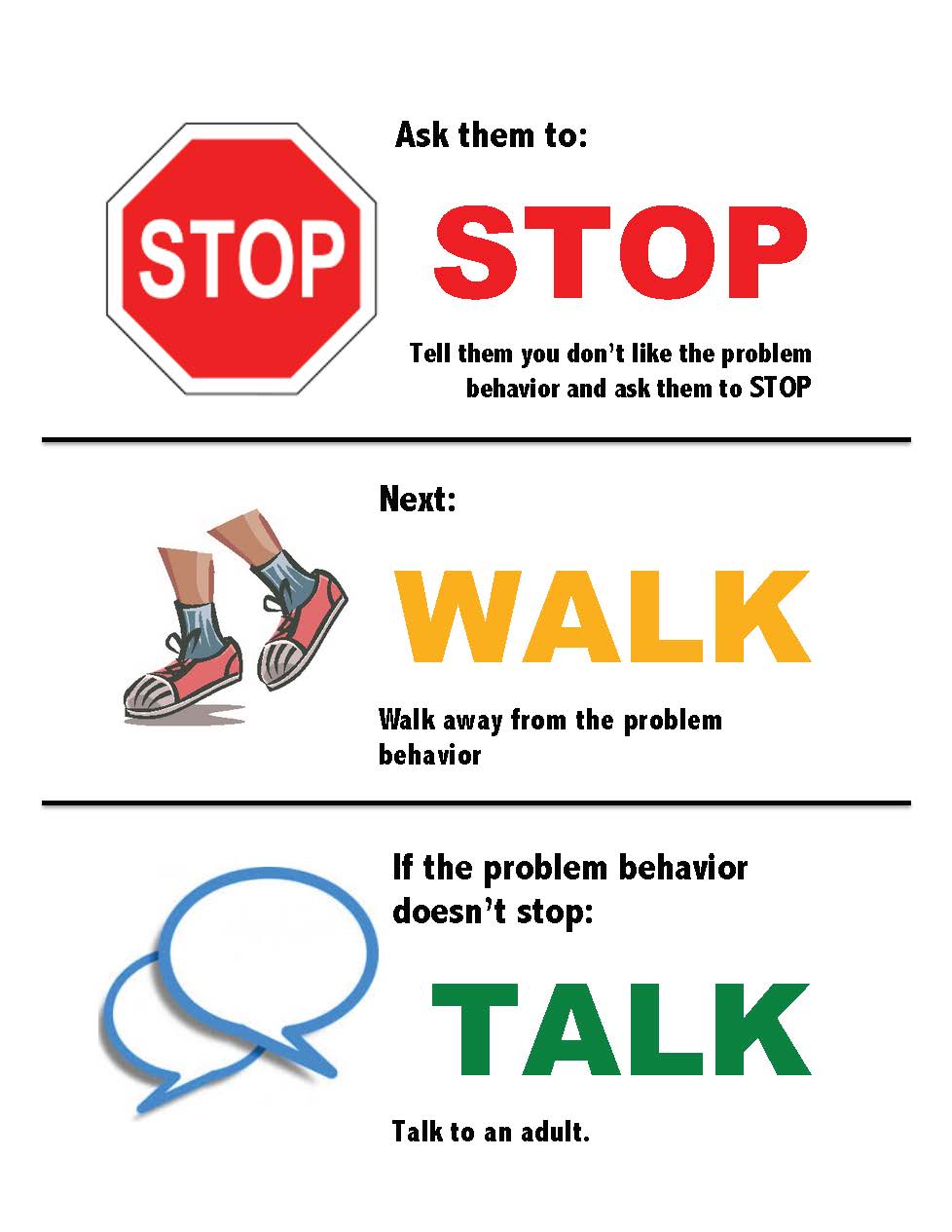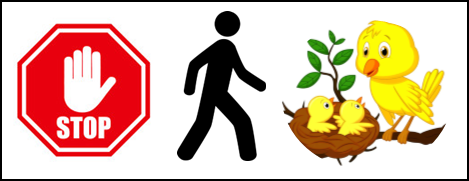
In a meeting yesterday, I learned something that was a new idea to me: teaching kids that when another child is doing something they don’t like, they should “Talk, Walk, Squawk.”
I have learned that it is a fairly common “bullying prevention strategy” taught to elementary school students. I think the method would also work well with preschoolers, but I would never present it as bully prevention at that age. When preschool age children push, or steal a toy, or say something that feels hurtful, it’s very rare that it’s an intentional “bullying.” They push because it’s hard to wait for your turn on the slide when your impulse control is still developing, they take a toy because they want to play with that toy and their empathy is still developing, they say whatever comes to mind without being aware how it could feel to someone else.
But I do like the basic idea at the preschool level, because it gives kids an easily understood collection of options for what to do when another child is doing something that bothers them. (Note: some examples describe this as “what to do when someone is being mean to you”, but that assumes ill intent from the other person.)
You could choose what order to teach them in: some start with a “walk away” plan – you can always choose to remove yourself from the situation; some start with “stop” – first you say “stop” to quickly let the other child know you don’t like what’s happening; some start with “talk” – explaining what you don’t like (although I’d recommend instead teaching to explain what you would like the other child to do instead – we know children are more likely to respond well if you tell them what TO DO, instead of what not to do).
It’s also important to teach “Squawk.” You could think of this as “tell a grown-up”, but I prefer “ask a grown-up to help you problem solve the situation.” The tell a grown up approach could fit into a more authoritarian model where the grown-up intervenes and punishes, the ask a grown up for help fits better in a model where you’re supporting the children in learning their own problem solving skills, and learning what it means to interact well with others.
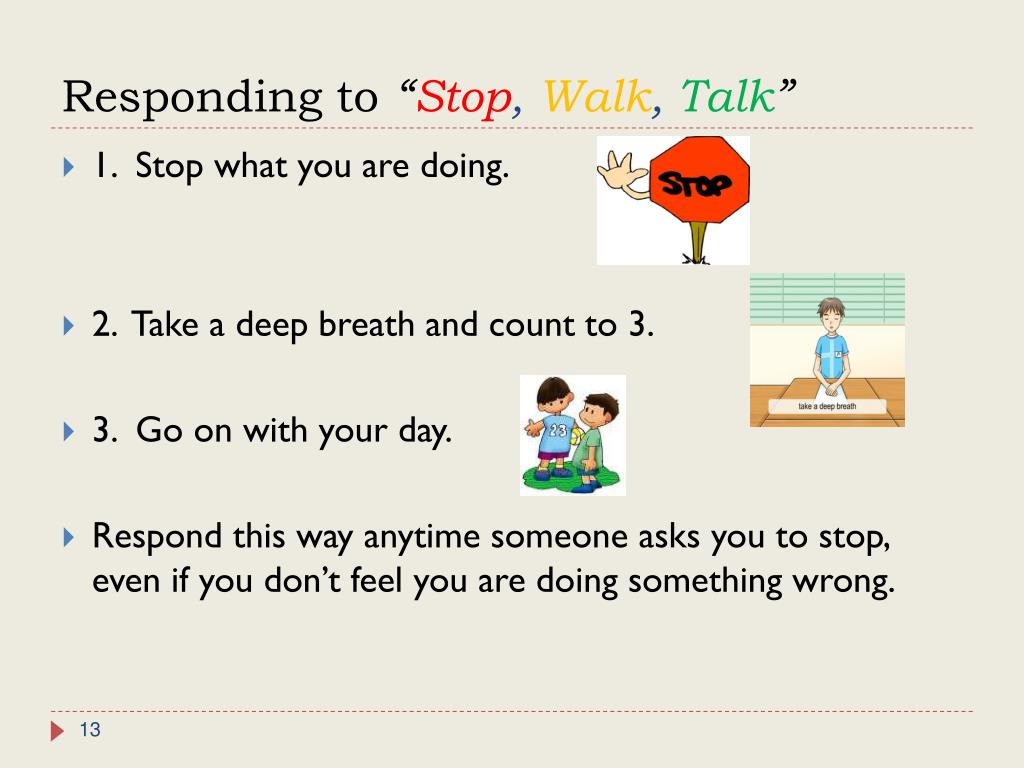
You can also teach children how to respond to being told to stop. Stop what you are doing, take a deep breath, try doing something different or asking a grown-up for help. They should know that if someone says stop, they should stop, even if they don’t think they’re doing anything wrong.
Resources: More info about the Stop-Walk-Talk method; A sample social story, a sample poster.
 More Good Days with Kids