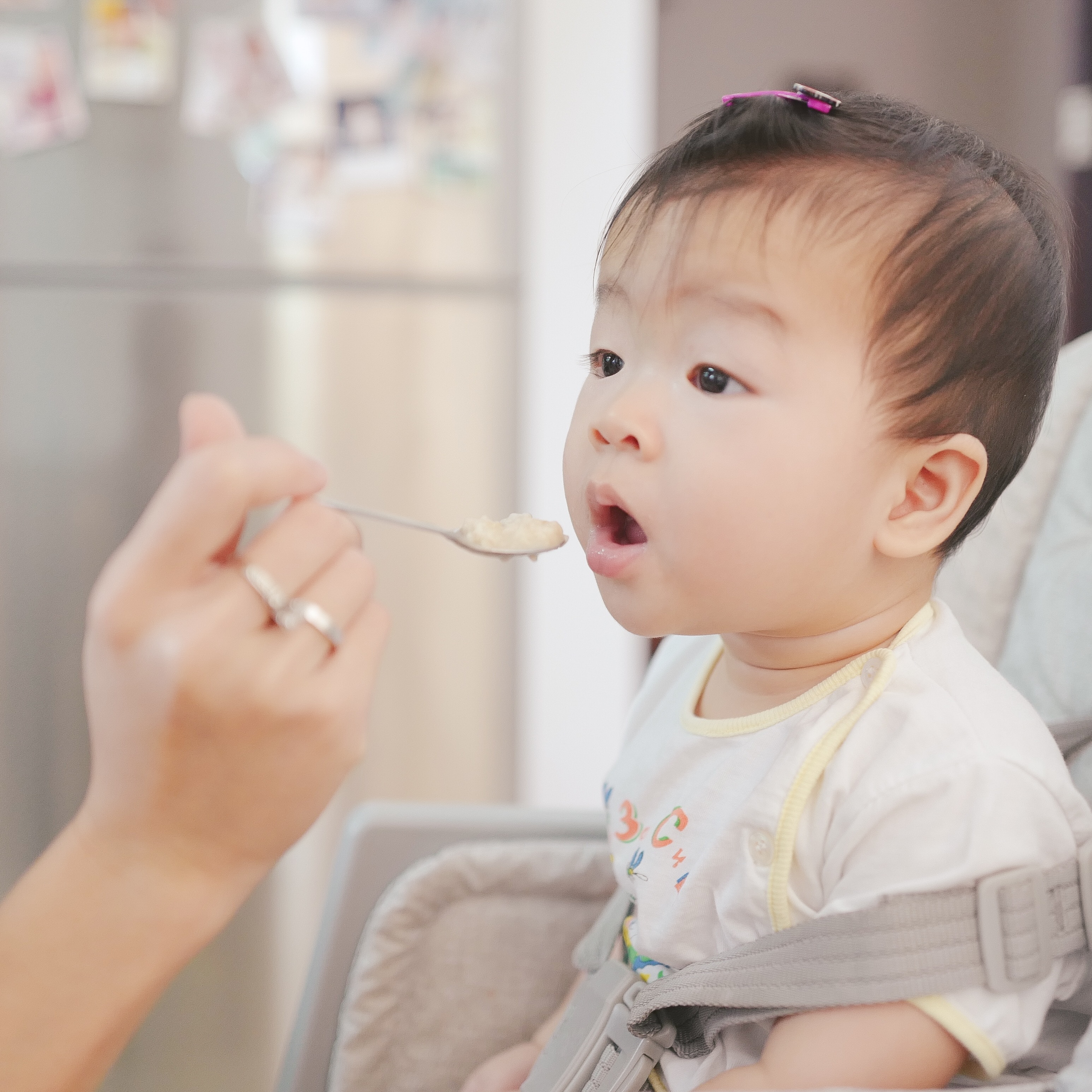
Since it was first published in 1983, Ellyn Satter‘s Child of Mine (affiliate link) has been considered the leading book involving nutrition and feeding infants and children. Her “division of responsibility” concept can be summarized as: You are responsible for what, when, and where. What food you’ll offer, and when and where your child is allowed to eat. Your child is responsible for how much and whether to eat. A short way to say this is “parent provides, child decides.”
Recent trends in the field add the idea of “responsive feeding” especially with infants and toddlers who are not yet communicating clearly. (This handout from the AAP is a great overview.)
What is Responsive Feeding
Responsive feeding emphasizes the interactive nature of feeding. Parents set guidelines (decide what, when and where food is offered), then there is a respectful give-and-take, or serve-and-return, where 1) the child signals that they are hungry with movement, facial expressions or sounds, 2) the caregiver provides food and engages with the child to create a warm and caring environment which encourages eating, 3) the caregiver watches for signs that the child is full and helps wrap up mealtime.
Responding to your child’s cues communicates love and fosters a close relationship. You’re also preserving their inborn appetite regulation by providing food when they signal they are hungry and not pushing them to eat more when they signal they are full. This can lay a foundation for a lifelong habit of following cues and eating only when hungry rather than eating for emotional reasons, eating because they’re bored, or eating to be in the “clean plate club.” This may reduce obesity in their future.
Recognizing Hunger and Full Cues
Responsive feeding for an infant requires knowing how to recognize hunger cues (such as rooting, tongue thrusts, and sucking) and full cues (letting go, falling asleep, long pauses in sucking pattern.) I have a video you can watch to learn about Newborn Cues. For an older baby, eating solid foods, hunger cues may include leaning toward food, opening their mouth, focusing on and following food with their eyes. Full cues might include: spitting out food, pushing it away, closing their mouth when you offer food or turning their head away, being distracted, playing with the food.
When your child is around 9 months old, you can teach sign language basics like the signs for “milk”, “more” and “all done.” Toddlers can then communicate with those signs, and, of course, older children will learn to use words to tell you when they’re hungry and when they’re full. Especially if these are concepts you’ve been talking about and cues you’ve been responding to since birth. (Note: older children do sometimes mistakenly say they’re hungry when really they are bored or anxious or have some other needs.)
A few other tips for supporting responsive eating:
- the feeding environment should be pleasant with few distractions (e.g. no TV)
- the child is seated comfortably, facing others for interaction
- foods are healthy, tasty, developmentally appropriate and offered on a predictable schedule when the child is likely to be healthy
- don’t force a child to finish the food on their plate – forcing children to eat usually leads to eating less
- don’t use food as a reward or a punishment – food is a basic need and shouldn’t be mixed up with discipline.
- make mealtime a joyful bonding experience
- try to serve as a positive role model for healthy eating
Learn more:
- Check out these recommendations from HeadStart – the webinars, though designed for professional home visitors, are also helpful for parents.
- Feeding Guidelines for Infants and Young Toddlers: A Responsive Parenting Approach (full report, executive summary, use in a child care setting)
- Responsive Feeding: Strategies to Promote Healthy Mealtime Interactions by Maureen M. Black and Kristen M. Hurley
- This video shows responsive feeding of a 7 month old.
- what about picky eaters…
Photo by Phong Duong on Unsplash
 More Good Days with Kids
I used “Child of Mine” as a guide in feeding my children. It was so helpful and alligned with my parenting philosophy. When my oldest was ten, we learned both my sons are autistic. I’m so happy that we had a stress-free eating plan early on. They did go through some picky eater stages, mostly in their elementary school years. I provided the healthy things that they would eat, and taught them to cook some basics for themselves so they could opt-out of the family meal as needed. As twenty-somethings, they often order the most unusual thing on the menu!