Tag Archives: incredible years

Child-Directed Play

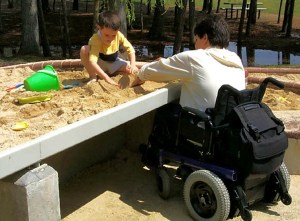
sand2

For a young child, most of their activities are directed by adults: we tell them when they need to eat, sleep, go to the bathroom, listen to stories and so on. Even when they play, sometimes we direct them – telling them how they should play with something, or else we interrogate them – “what color is that car? how many cars are there?”

Just take a moment to imagine what that would be like for you to be told what to do all day long. And then when you finally settle in to some “me time”, someone comes along and asks you question after question. It would drain your energy tanks, right? You might get cranky at that person. You might start to tune out their questions, or resist their suggestions.

Do you have a child who you feel is tuning you out – not listening to you? Do you have a child who is resisting doing what you tell them to do?

Try listening to them. Try letting them tell you what to do for a little while each day. I don’t mean put them in charge of discipline for you! What I mean is spend a little time each day that’s all about play, and even better, is all about your child deciding what to play, and you following along. Let them take the lead for a while and have fun discovering where they’ll lead you.

The Incredible Years program talks about “building up your child’s bank account” of energy, connection, and good will towards you as the parent. If they have a full bank, they’re much more willing to listen to you and do what you ask than if they’re feeling drained.

Many things fill their bank, including: praise, support, love, attention, and special time playing with them one-on-one.

To build a stronger, more positive relationship with your child, try dedicating at least ten minutes a day to a focused session of child-directed play. Here are some tips:

  • Call it “special time” or some other words that cue them that this is the time when they get to decide what happens.
  • Let them choose the activity.
  • Follow their lead. Model cooperation by doing what your child asks you to do.
  • Don’t focus on “the right way” to play, and don’t feel like this needs to be a time when you’re teaching them. This is just about building connections.
  • Praise their initiative and encourage their creativity.
  • Laugh and have fun.
  • Don’t quiz them on academic questions that have a right answer – these questions drain the bank. Either they don’t know the answer, which is stressful, or they (and you) already know the answer, so nothing new is learned by asking the question. Instead, try:
    • Silent observation.
    • Narration – talk about what you see them doing. “You picked up the red car and ran it down the ramp. Now you have the blue car.” Try to use descriptive comments much more often than questions.
    • Notice what they’re interested in and talk about that. That way, they’re setting the agenda, not you.
    • Open-ended questions – questions that you don’t already know the answer to. “What are you planning to do next?” “What would happen if…?”
  • Give just enough help to help them with frustration, but don’t take over the play, and don’t leap in to solve every problem for them.

You can use the Attention Principle while you play. Pay special attention to anything that you like about what they’re doing: “I appreciate that you shared that with me”, “you kept trying even though you were frustrated, and look, you did it!” If they do something annoying or something you don’t want to encourage, just ignore it. (Unless of course it is unsafe or breaks a family rule – you do still need to set reasonable limits.)

You’re modeling for your child what cooperative play looks like, and helping them develop social-emotional skills that will help them also play well with others.

Learn more tips for child-directed play using Greenspan’s Floortime method. https://gooddayswithkids.com/2019/01/15/floortime/

For parent educators and other professionals, here’s a handout on this topic you can share with parents: Child Directed Play handout.


Ignoring Annoying Behavior

The second step on my discipline flow chart is to “pick your battles.” Ask yourself: Is their behavior really a big problem that needs serious consequences? Or is it just annoying? If it’s just annoying, just ignore it.

Let’s start with a few examples:

  • If you’re trying to get work done, and your child keeps coming over and whining about a snack, this is certainly annoying. But asking for food isn’t a discipline problem. You could just ignore the child until they ask politely, or you could give the child a hint: “it’s hard for me to understand you when you’re whining. If you used polite words and a nice voice,  I could hear you better.” Ignore them as long as they’re whining. As soon as you hear the polite request, respond to it.
  • If you’ve asked your child to pick up their toys, and they are doing so… but they’re stomping around and making faces while they do it, ignore the bad behavior, and turn your attention to what they’re doing well: “Thanks for getting all the Legos back in the tub.”
  • If your kids are squabbling in the backseat, instead of scolding for that behavior, just say “hey, I downloaded a great science podcast you’ll really like. When you’re ready to listen, I’ll turn it on.” Drive on, ignoring the bickering till they settle down, then turn on the podcast.

Your goal is to ignore the annoying behavior. As soon as you see positive behavior, focus on that. This ignoring method is a corollary to the attention principle. The more attention a child gets for a behavior, the more they will repeat it. So, play plenty of attention to positive behaviors. Ignore the ones you don’t want to reinforce. (Of course, if the bad behavior is significant, you’ll set limits and consequences… Ignoring is mostly for the things that are annoying little things, not the big stuff.)

All discipline is grounded in relationship.This technique does not work in a relationship where the child is often ignored or dismissed. But in a warm relationship where they regularly get attention for positive behavior, ignoring can be effective. It’s important to be clear that this ignoring is not intended as a rejection of your child, just of their current behavior, so it takes place in the context of a loving relationship.

Also, if your child is having strong feelings, don’t dismiss the emotions. Validate the emotions and turn attention toward the positive things they are doing to cope with them, but ignore annoying behaviors that result. For example, my son was begging for more screen time, and I said “I know you’re really sad about not being able to play more.” And “I see you’re looking through your books for something else to do.” But I didn’t acknowledge the repeated begging.

You can also teach your children to use their “ignoring muscles.” If their sibling or classmate is annoying them, they can ignore the other child. If they respond, the annoying behavior continues. If they don’t respond, the other child may give up.

When ignoring, you really want to be bland and poker faced and show no outward sign of noticing or caring about the bad behavior.  Don’t roll your eyes or sigh. Just think: If your daughter puts her fingers in her ears, turns her back and says “I’m ignoring you” and then turns back to make sure your son has noticed he’s being “ignored”, then he’s not really being ignored is he? He’s actually got all of her attention right now. It’s better to walk away and do something else as blandly as possible.

Test this method out, and comment to let me know what you think!

This is one of the many tools taught by the Incredible Years parenting program – check out their book for all the details!

The Attention Principle

attention

A key concept in the Incredible Years program is the Attention Principle. Children want attention from their parents, teachers and peers. They will repeat behaviors that get attention. They are less likely to repeat behaviors that are ignored.

Ideally, kids want positive attention: praise, rewards, smiles and snuggles. But, if they feel like they’re not getting enough of that, they will settle for any attention, even negative.

Therefore, when you see your child behaving well – being calm, cooperative, kind, taking turns, and sharing, reward that with positive attention. If your child is behaving badly, but in ways that aren’t directly harming anyone or anything, like whining or repeating the same words over and over or making sassy demands rather than asking polite questions, ignore it. If they are behaving in a way that causes problems, then calmly give clear instructions about exactly what they need to do differently.

I imagine this all sounds obvious and you’re probably thinking “yes, of course, that makes sense.” But I want you to think… is this what you’re actually doing?

When our children are calm, quiet, and well behaved, we often are relieved because it allows us to focus on all the other things we need to do: make dinner, pack a lunch, put the laundry away, or pay the bills. We may not say anything to them, because everything is going fine.

But then, if the siblings start squabbling, or the toddler starts jumping on the couch, or the whining begins, we jump right in with our full attention. “You two stop fighting!” “I told you not to jump on the couch – do I need to come over there?” “How many times do I have to say, no candy before dinner?”

From their point of view, if they’re really lucky, not only will they get your attention, but they might also get a bribe to stop the bad behavior: “If you stop fighting, I’ll get the art supplies out.” “Sit down on the couch, and you can watch YouTube.” “Fine, yes, have one piece of candy, then go play so I can get dinner finished.”

Giving attention or rewards to bad behavior “feeds the monster.” The more that behavior gets attention, the more they will use it. And it’s easy to get into a pattern where most of your interactions are them misbehaving and you struggling to keep up with managing it. You may feel like if you step back, they’ll trash the house or hurt someone.

It does take a while and some consistent effort to change that pattern once it’s begun. But start trying today!

For annoying but not harmful behaviors, just ignore them. And then as soon as your child is showing good behavior, give them positive attention.

If their misbehavior could cause problems (they might break a toy, or spill foood, or get hurt, or hurt someone else), you do need to step in and set limits. But do it with as little excitement and attention as possible. If you come running across the room saying “no, no, no” or “stop that” and take things out of their hand and then talk and talk – that’s lots of attention and that feeds the monster of misbehavior, right?

Instead, try calmly telling them what to do differently: “Can you play with that toy gently? If you bang it like that, it might break.” The clearer your instructions are about what to do, the better. And as soon as they do anything that is better than what they were just doing, give positive attention like that, and tell them exactly how they could do even better, then praise it when they do. Or, try a “when/then.”  “When I see you sitting in your seat, then I can get you more snack.”

If they continue to misbehave, do an if/then, where you let them know what the consequence will be if they continue. “If you throw the sand again, we will need to leave the playground.” And then if they do, calmly take them from the playground. Again, don’t be big and dramatic about it – the attention feeds the monster. Just be matter-of-fact and take them away. Then, in the new environment, as soon as you see good behavior, pay attention to it.

What can you do today to start shifting your attention toward what you want to see more of, and ignoring the behavior you’d like to see less of?