Category Archives: Parenting

Best First Pet for a Child – Betta Fish

Recently a parent asked me: “what’s the best first pet for my child?” She had grown up in a culture where most people didn’t own pets so had never had one herself. But she had found that pets are a big part of American culture. For example, a common question at school is “what kind of pet do you have?” Or teachers give assignments to describe your pet. She didn’t want her child to miss out, but didn’t know where to start.

I wrote another post on all the factors to consider when getting a first pet for your child. Some definitely take a lot more work than others! This post is just about my recommendation for a first pet – the betta fish (also known as a Siamese fighting fish.)

They are beautiful to look at. (And watching fish in an aquarium can reduce stress, blood pressure, and hyperactivity.) Betta fish will respond to you when you come to the tank, swimming up to you (unlike most other fish). Some bettas will learn tricks, like following a prop as you move it through the water. They’re also manageable for busy parents to care for, and low cost after the original investment. Betta fish are also good classroom pets for teachers to manage.

I’ll begin with a super-quick overview of how to get started. (I’ve included Amazon affiliate links, in case they’re helpful. I do get a small commission at no cost to you if you click on these and then purchase something.) Further down in the post, there are more details, and links to learn lots more. I am not an expert in this – I’m just a mom whose kids have owned betta fish and we made it work well.

Buying Supplies

Here’s what you’ll need that you can order online or get from Amazon. (Click here for the full list in one place.) It’s best if you get this all set-up and running for about week before getting your fish. (But it may be hard for children to be that patient.)

Here’s what you’ll get at your local pet store

  • 1 – 2 Moss Balls
  • 1 Nerite Snail

Yes, there’s a fair amount of start-up costs. That adds up to about $170. (Plus the fish will be ~$10 – 15.) But once you’ve got that, you’re almost done with costs. The food lasts for months, as does a container of water conditioner. The snail and moss balls may last as long as your fish does. (A few years.)

Choosing your Betta

Betta are beautiful, but there’s more to check for than just looks.

At the store, when you move your face or finger up toward the fish’s bowl, does it respond? Healthy betta fish will swim up to investigate when you come near. Some may flare at you aggressively. (In the picture below, you can see the flared out gills as this fighting fish tries to show you how tough he is.) Our first two betta were friendly and inquisitve when we came near. Our third was definitely a tough guy with lots of machismo.

How does the fish look? Healthy betta have bright colors and undamaged fins. Signs that a betta might not be healthy: lethargic, uneaten food in tank, dull coloring, tattered fins, white growns on body, and labored breathing.

Male betta fish have longer and fuller fins and tails.

You generally only want to buy one betta: Bettas are solitary pets – never put two males together in a tank – they will fight till one is injured or dead. Also don’t put a male and a female in the same tank – males are too aggressive. (You could keep a few female bettas together in a larger tank.)

More details:

Aquarium with pump/filter, heater, and light

You may see suggestions that you can keep a betta in a very small container (like a big margarita glass) with no pump. That is not a humane way to keep one and they won’t live long like that. (You could live in a closet, but it wouldn’t be a happy life, right?) A 2.5 – 5 gallon tank is best.

This is the tank I had – we bought it at Petco and it’s still in good condition after 5 years. However, the pump creates a strong current. The same company offers this betta tank that has a more betta friendly pump.

The tank must have a lid! Our first betta fish was a jumper. Once I came into my daughter’s room and found something on the floor that looked like a feather – I realized it was a dried out betta fish! I scooped it up and put it back in the tank in time, luckily.

Don’t fill the tank to the very top. Betta originally lived in puddle-like still water (streams and rice paddies), and need to be able to go to the water’s surface to gulp air. (Betta can get oxygen from the air as well as from water via their gills.) Because of this, they don’t need an aerator in the tank.

Heater

Keep the water heated to between 76F (24C) and 82F (27C). Betta are tropical fish, native to Thailand, Vietnam, Laos and Cambodia. In cooler water, they become sluggish and sickly and can’t digest food well. (If your tank doesn’t come with a heater, be sure to buy one.) Don’t put your tank right next to a furnace vent or air conditioner which could have a strong effect on the water temperature.

Filter

Filters reduce harmful bacteria while supporting healthy bacteria, and make it easier to keep the tank clean. The one that came with my tank had a very strong current, which is hard on bettas who evolved in very slow moving waters. So, I only ran it for an hour a day. If your tank didn’t come with a filter, Fish Girl recommends choosing a sponge filter. (Learn about sponge filters.)

Light

Betta like light in the daytime and dark at night. You can put them in a place where they get natural light, but not in bright direct sunshine, which can overheat their tank. They look prettier and it’s easier to see them if you have a bright aquarium light you turn on, but I found that if I left the light on for more than an hour or two a day I got a lot of algae growth I had to deal with cleaning.

Tank Set-Up Needs

Sand or gravel – you’ll need about 1.5 pounds for each gallon of water to end up with 1-2 inches of substrate.

Accessories / decor for the betta to hide in / behind: Bettas don’t like to feel exposed, so make sure you have things for them to hide in / behind. Some like to rest on things near the surface of the water, so include some of those in your decor. Choose silk plants rather than plastic, and check all accessories for sharp edges – if it would snag pantyhose, it could harm the betta’s delicate fins. File sharp edges if needed.

Water conditioner. When you set up the tank, or replenish the water, you’ll need water conditioner. It neutralizes harmful chlorine, chloramines, ammonia and heavy metals in aquarium water. The pH of the water should be between 6 and 8 and the hardness between 5 and 35 dGH. Ammonia should be 0 ppm, nitrates < 40 ppm and nitrite 0 ppm. If your tap water comes from a municipal source, you may be able to find test results online for initial set-up. You can get test strips to evaluate your water over time. Do not use distilled water. It is lacking vital minerals.

Moss balls help remove nitrogen and phosphate from the water, and reduce algae by competing with algae for nutrients. (Learn more)

A nerite snail helps to clean the tank. Watching it slowly cruise around the tank adds interest. (Our son said the fish was his pet, and the snail was the fish’s pet.) Learn more about snails. It is better to get the snail before the fish, as sometimes when you introduce a snail into a betta’s existing habitat, it views the snail as an intruder and harasses / attacks it.

Food

We used Betta Bio-Gold pellets. We fed 8 – 10 in the morning, 8 – 10 in the evening. One .7 ounce container lasted more than a year. (FWIW, one guide says to feed 2-4 pellets twice a day. We fed double that and our fish lived for over two years…)

Choose a pellet food with fish as the first ingredient, and protein >38%. Don’t use flakes – they can cause bloating. You can give frozen bloodworms or brine shrimp for treats (thaw them before feeding).

For vacations, fish can go 2 or 3 days without food. When we were gone for a week, we used Pro-Balance vacation feeders. You do need to clean the tank of the residue when you return. When we were gone two weeks, we had someone come in to put in a new feeder on day 8. Our fish didn’t do well after that two week vacation. I might try the Marina buffet blocks. Or learn more here about vacation needs.

Maintenance

For a 5 gallon tank, it’s recommended that once a week or every other week you do a 25% water change. That means removing part of the water (not all) and replacing it with new conditioned water (use water at about the same temperature as the tank). Doing a partial water change helps to reduce the ammonia in the tank, but is less of a shock to the fish than a 100% change.

Once every 3 – 6 weeks, do a full clean and 100% water change. Clean the gravel (put it in a strainer and rinse it) and the silk plants and accessories (scrub and rinse with water, no soap.) More info on cleaning the tank.

There have definitely been times that I was not an ideal pet owner, and I went a lot longer between water changes and tank cleanings than this, and the fish survived. But these are the recommendations.

Note: a fish tank is an eco-system and it can get out of balance – for example, you can have a severe overgrowth of algae where the tank is filled with green gook. The balance I describe here is what worked for us: the moss balls, the snail, only turning on the tank light for an hour or two every day. If I started to see algae growth, I used the tank light less (note, the tank was in a corner of our kitchen counter so there was plenty of sunlight and artificial light in the room, just not direct into the tank.)

Note: If you see a lot of bubbles on the surface of the water, that means your fish is happy! He’s made a bubble nest in hopes of attracting a mate.

Lifespan

Some guides say they can live up to 10 years with proper care, but most pet ownership guides say 2 – 4 years. The three bettas my family has owned each lived 2 – 3 years. I believe that when you take a living creature into your life, you are committing to care for it for its natural lifespan, so I would encourage you to only get a betta if you are open to the idea of having it for 4 years or so.

Helping Your Child Be a Successful Pet Owner

It’s great if your child can take on much of the work of pet care! It’s a great way to learn responsibility. However, you as the adult are ultimately responsible for the well-being of this living creatue you have brought into your home.

I recommend writing up a checklist to keep next to the tank. Or use a calendar. Either way they make a checkmark when they feed the fish breakfast and again when they feed it dinner. That lets you keep an eye on whether or not the fish is getting fed. Also create another system for remembering to clean the tank or rotate the water.

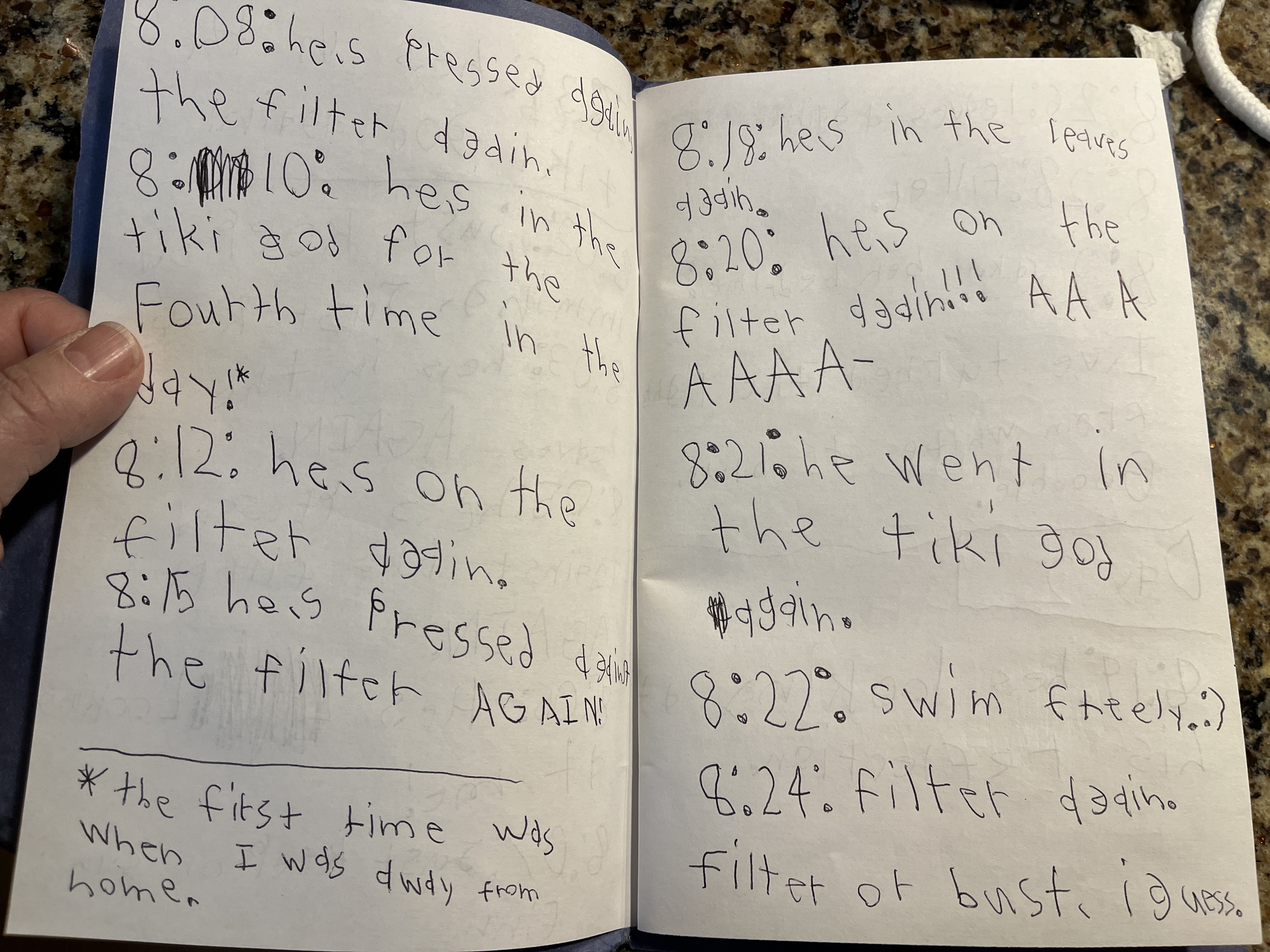
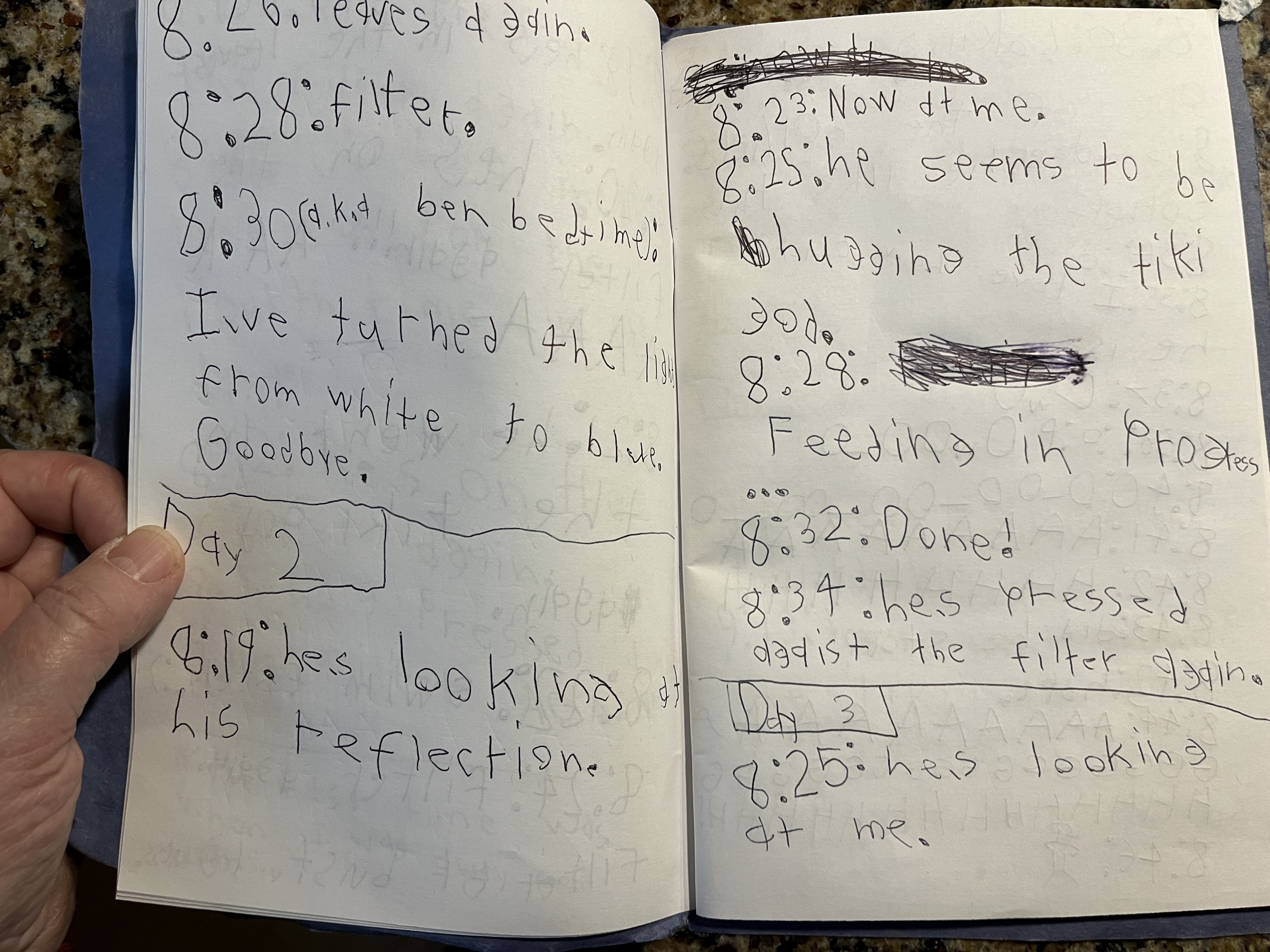
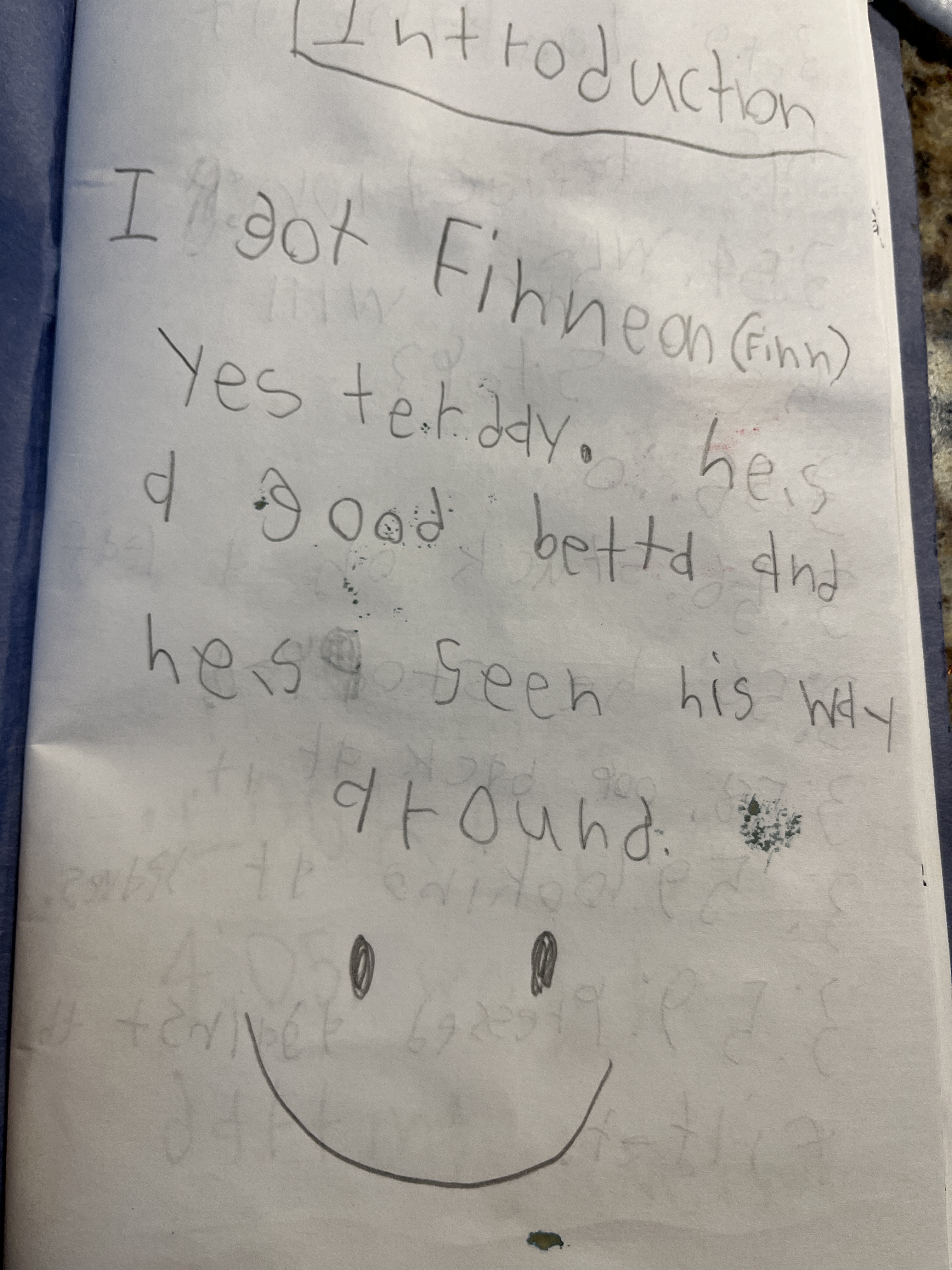
You can also encourage your child to find other ways to connect with the animal. Here are some pictures from my son’s “betta log book” and his initial experience with his first pet.

More info on betta care:

Choosing What Type of Pet to Get

TL; DR: My recommended pet for first timers is a betta fish. But whatever family pet you’re thinking about getting, some key things to take into consideration are:

  • start-up costs for the animal and its needs (shelter, food, etc.)
  • daily effort needed (e.g. feeding, walking) and weekly/monthly effort (changing litter box, cleaning cages / tanks, purchasing food, etc.)
  • vacation issues – if you go away for a weekend or a week, what needs will the pet have?
  • lifespan cost and effort: how long will the pet live? how much effort / cost does it take to keep the animal fed? what health care costs might you face?
  • annoyance factor: does the pet create lots of noise or unpleasant odors or does it make messes that must be cleaned? Is it nocturnal? what about allergies?
  • reward: what joys can be found in owning this pet?
  • making the decision that’s best for your family

Background

I know a lot of people start by thinking about the rewards of pet ownership – they imagine how fun it will be to play with their puppy, or snuggle their kitten, or watch the hamster roll around in its ball. Those are all joyful experiences, but owning a pet is also a lot of work and responsibility and there are plenty of non-joyful aspects.

When I was a kid, I volunteered at a local animal shelter. I saw so many good animals relinquished – some of which went on to other homes but many that were euthanized. Sometimes pets were relinquished because their owner’s life circumstances changed in unexpected ways and they weren’t able to continue to care for the animal, but more often they decided they just didn’t want to.

I believe quite strongly that when you take a pet into your life, you are committing to that animal’s health and well-being for its natural lifespan, so it’s important to think carefully before taking on that commitment.

Who Makes the Decision?

If your child is asking for a pet, remember it’s really going to be the parent who ends up being mostly responsible for the pet. Tweens and teens may be more responsible than younger children, but will still need lots of support. So, the adult has final say. If there are multiple adults in the household, they need to talk it through and be sure they are in agreement about the pet and about who will be responsible for which aspects of pet ownership.

So, if my child asks for a pet, I first need to decide whether I’m willing to consider it at all. If I am, then I make my children do all the needed research. If they want a pet, I go through the topics covered in this article with them, and I tell them they have to know the answer to those questions before I will consider the pet, and we have to have a care plan for the pet before bringing it home.

Start-Up Costs

Part of the research is learning about ALL the things you’ll need for the animal. We tend to only think of a few of the supplies at first, then they start adding up. Consider:

  • cost of the animal itself (note: where possible, please consider adopting a pet from an animal shelter or rescue facility rather than buying a new pet from a store or a breeder. There are many great animals who need a new home! Adoption is also often cheaper than purchasing.)
  • where they’ll live / sleep: an aquarium? hutch? bird cage? dog crate? pillows to sleep on? What other things are needed to make that the appropriate habitat for them: a light? a heat lamp? a pump? a heater? places to hide?
  • what are their toileting needs? will you need poop bags? litter box? do you need bedding (e.g. cedar shavings in a rodent cage)
  • what feeding supplies do you need? food dish? water bottle?
  • what toys and accessories will you buy to enhance the fun of pet ownership? chew toys? costumes? hamster ball?
  • any needed medical care: vaccinations? spay / neuter?
  • for dogs and cats, there might also be licensing fees, pet deposits at an apartment, and so on

Effort – Regular Care and Maintenance

What will you need to do every day to care for your pet? What else will need to happen on a regular basis (like once a week, or once a month)?

  • Feeding: how much time, effort and clean-up does feeding entail?
  • Obtaining food: how often will you need to go to the store to buy food – can you get food at any grocery store or do you have to go to a specialty pet store?
  • Toileting / Hygeine: letting a dog out or taking it for a walk several times a day? changing a litter box? cleaning shavings? cleaning a tank? What supplies will you need and what are the on-going costs?
  • Cleaning up after your pet: if you have a pet that roams the house, even if they are housebroken, there may be times you need to clean up feces or urine. They may also chew shoes, scratch up furniture and so on. Birds are known for scattering feathers, poop, seeds and more around their cages.

Dog Walkers, Day Care and Vacation

How many hours can your pet be left alone? How will that work around your daily schedule of work, school, and children’s activities? Will you need a dog walker? Doggy day care?

How many days can they be left alone? What care will they need while you’re away on a vacation? How easy will it be to find someone to provide that care? How much will it cost?

Some people take their pets along on vacations – if you plan to do so, how will that limit your options for where you can stay and what you can do on your trip?

Lifespan Cost and Effort

In choosing a pet, it’s essential to be aware of their expected lifespan, so you can decide whether you want to commit to the cost and effort for that full time period.

In addition to the effort and costs above, what are some other things to consider? If you’re getting a dog, will there need to be a lot of upfront effort in obedience training? With any pet, as they get older, health issues may cause complications (e.g. incontinent cats, arthritic dogs who can no longer climb stairs.)

Consider vet costs, and how you’ll handle them. I will be honest with you that as much as I’m committed to caring for a pet as well as I can for its lifespan, when our betta fish was ailing, I was researching what I could do – articles talked about taking him to a vet. Buying a new betta costs $15 – I don’t know what a vet visit costs, but I chose instead to provide hospice care at home – keeping him as comfortable as I could for his final days.

For my dogs, of course I took them to the vet and provided all needed basic medical care. But had they developed a complex condition that would have taken thousands of dollars to treat, I would not have done so. If I had that money to spend on pet well-being, it would make more sense to me to donate to a local animal shelter or spay-neuter program which would benefit many more animals.

Your ethical stance on this may be different than mine, but you should think about what it is before you have a pet and before you face decisions about their medical care.

Annoyance Factor

Pets can have behaviors that are normal and natural for them but can be troublesome for humans. Before purchasing / adopting a pet, do some searching online to learn more or ask people you know who own that animal.

Some examples:

  • dogs bark – some breeds bark a lot more than others
  • cats jump on kitchen counters; cats mark – spraying urine on vertical surfaces
  • birds chirp and squawk – often early in the morning
  • rodents smell bad
  • although geckos are silent, the crickets that they eat chirp a lot (especially the big ones)
  • many popular pets (e.g. hamsters, mice, hedgehogs) are nocturnal animals which means they may be asleep all the hours that your child is awake, and may be squeaking, scratching and disruptive at night
  • fish tanks can get very overgrown with algae if you’re not careful.

There are options for mitigating each of these annoyances, but they are part of pet ownership to consider.

Another issue: are there pet allergies in the household? Allergies to cats and rodents are pretty common, and dog allergies are not unusual (though some dogs are hypo-allergenic.) If you’re not sure if there are allergies, try spending time with an animal before committing – for example, if you’re considering a rodent, perhaps you could offer to pet-sit a rodent for someone who is going on vacation – having it in your home for a week would help you know what you’re getting into.

Reward?

What are the best parts of owning any particular type of pet? Again, search online to learn more and ask people you know who own that type of pet.

Think about what reward you most want and what pet most fulfills that. Some examples:

  • something pretty / interesting / relaxing to look at in exchange for a fairly low level of care? Fish. Some reptiles. Some birds.
  • something more active but that is mostly confined to its cage? rodents, some reptiles
  • a manageable way for your child to practice responsibility? Fish, reptiles, some rodents.
  • something to cuddle? Some cats, most dogs, some rabbits.
  • something to get you out in the world and engaging with others? Dogs.

If you’re considering a cat, realize that they can have very different temperaments – some are social, some shy, some playful, some grumpy, some cuddly, some avoidant.

If you’re considering a dog, please realize that different breeds have very different traits – if you want a guard dog, or a dog that plays fetch, or a dog that lies to quietly snuggle, do your research to figure out what breeds match that. Don’t just pick based on appearances.

What’s Best for Your Family?

You can evaluate all the info above and take into account your own goals, limitations, and priorities and make the best decision for your family. I can share just a few examples from my experience.

Dogs

For the first 50+ years of my life, I owned at least one dog. I don’t at the moment. Because my past three dogs have each lived 15 – 17 years. That’s a lot of joy and love, and the dogs were a huge part of our family life and memories. But that was also a lot of dog walking, paying for boarding when vacationing, scooping poop, paying vet bills, not being out of the house for more than 8 or so hours at a time, and so on. It’s more than I’m willling to take on right now.

On the other hand, I know someone who has a dog who is a sweet but needy, anxious little dog who needs a lot from her. He worships the ground she walks on and is very sad when she’s away at work or elsewhere. She likes having him to care for because having to stay calm and reassuring for the dog helps to distract her from her own worries.

Rodents (and snakes)

When I was a young kid, we got 2 pet gerbils. One was sweet and cuddly. The other was mean and bit. To my memory, they were pretty good pets overall, until my brother’s friend took the mean one out of his cage and the gerbil bit him and the kid dropped it. I think it was a few days before we were able to find the gerbil in the pantry and get it back into the cage. (This is why you should have the rule of “you can only take the animal out of the cage when there is adult supervision.”)

In college, my room-mate had a corn snake, which was an easy room-mate. Quiet, non-obtrusive, easy to watch or easy to ignore. It only needed fed once a week – it ate pinkie mice. (Brand new baby mice, so young they didn’t have fur yet.) My room-mate wanted to save herself a trip to the store, so one week she bought two pinkies. The snake ate one, and was too full to eat the other. So the mouse just lived in the snake cage for a week… and it turns out that snakes are so stupid that once a mouse has been there for a while, they stop noticing it. So, I ended up taking pity on the terrified mouse and getting it out of the snake cage and getting a mouse cage and suddenly I had a pet mouse.

I had him for about six months. He was a little loud and stinky for an ideal dorm pet, and did need weekly cage cleanings. But it was manageable.

Reptiles

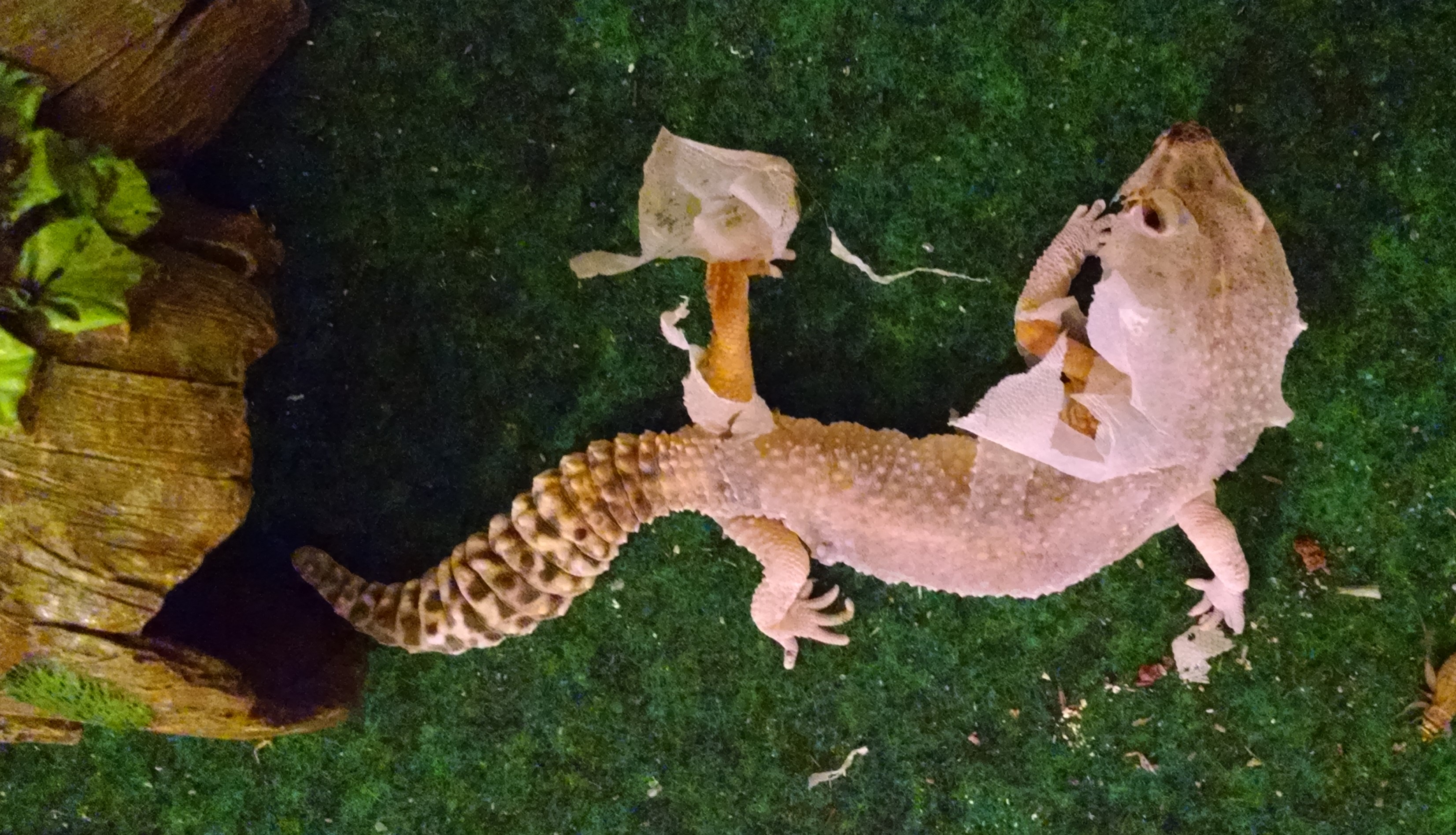
When my daughter was in middle school, she wanted a leopard gecko. (The gecko she got is shown in the picture above, where she’s shedding her outgrown skin.)

My daughter did all the research, took on all the responsibility and so on. The only thing I had to do was drive to the petstore every ten days to buy crickets. In general, the gecko was a very easy pet who provided some entertainment when you wanted it but didn’t care if were busy and paid no attention other than daily feedings.

I swear my daughter told me that the lifespan of a gecko was 3 to 7 years, and that’s what I thought I agreed to. She swears she told me 10 – 15. In the end, her gecko lived to 10. That means that when my daughter went off to college 1000 miles away, guess who took over care of the gecko? And what else did that mean? It means in the end, I drove to the petstore every 10 days for 10 years straight.

Fish

My daughter also had a betta fish for a few years. My youngest has had two betta fish – each lived for about 2.5 years. In that time, the effort was feeding it twice a day and cleaning the tank once a month. And going to the pet store for supplies a handful of times over those 5 years. For my son (who has ADHD), it was a manageable level of responsibility, and the family had the relaxing vibe of a fish and a snail hanging out in their aquarium on the counter.

What’s Best?

Were the dogs a more rewarding pet than the fish? Yes, of course, by far. But, at different times in the life of your family, you may make different tradeoffs between reward and effort. There’s no one right answer, but making an informed choice is important.

Learning More

Whatever pet you’re considering, it’s easy to do lots of online research to answer all the questions I’ve offered here. Do look at multiple sources, and be aware of their biases. (For example, a pet store that wants to sell you a pet and supplies may have a motivation to convince you that pet ownership is easy-peasy.)

Good luck on your journey to pet ownership!

Here’s my guide to owning a betta fish.

Responsive Feeding

Since it was first published in 1983, Ellyn Satter‘s Child of Mine (affiliate link) has been considered the leading book involving nutrition and feeding infants and children. Her “division of responsibility” concept can be summarized as: You are responsible for what, when, and where. What food you’ll offer, and when and where your child is allowed to eat. Your child is responsible for how much and whether to eat. A short way to say this is “parent provides, child decides.”

Recent trends in the field add the idea of “responsive feeding” especially with infants and toddlers who are not yet communicating clearly. (This handout from the AAP is a great overview.)

What is Responsive Feeding

Responsive feeding emphasizes the interactive nature of feeding. Parents set guidelines (decide what, when and where food is offered), then there is a respectful give-and-take, or serve-and-return, where 1) the child signals that they are hungry with movement, facial expressions or sounds, 2) the caregiver provides food and engages with the child to create a warm and caring environment which encourages eating, 3) the caregiver watches for signs that the child is full and helps wrap up mealtime.

Responding to your child’s cues communicates love and fosters a close relationship. You’re also preserving their inborn appetite regulation by providing food when they signal they are hungry and not pushing them to eat more when they signal they are full. This can lay a foundation for a lifelong habit of following cues and eating only when hungry rather than eating for emotional reasons, eating because they’re bored, or eating to be in the “clean plate club.” This may reduce obesity in their future.

Recognizing Hunger and Full Cues

Responsive feeding for an infant requires knowing how to recognize hunger cues (such as rooting, tongue thrusts, and sucking) and full cues (letting go, falling asleep, long pauses in sucking pattern.) I have a video you can watch to learn about Newborn Cues. For an older baby, eating solid foods, hunger cues may include leaning toward food, opening their mouth, focusing on and following food with their eyes. Full cues might include: spitting out food, pushing it away, closing their mouth when you offer food or turning their head away, being distracted, playing with the food.

When your child is around 9 months old, you can teach sign language basics like the signs for “milk”, “more” and “all done.” Toddlers can then communicate with those signs, and, of course, older children will learn to use words to tell you when they’re hungry and when they’re full. Especially if these are concepts you’ve been talking about and cues you’ve been responding to since birth. (Note: older children do sometimes mistakenly say they’re hungry when really they are bored or anxious or have some other needs.)

A few other tips for supporting responsive eating:

  • the feeding environment should be pleasant with few distractions (e.g. no TV)
  • the child is seated comfortably, facing others for interaction
  • foods are healthy, tasty, developmentally appropriate and offered on a predictable schedule when the child is likely to be healthy
  • don’t force a child to finish the food on their plate – forcing children to eat usually leads to eating less
  • don’t use food as a reward or a punishment – food is a basic need and shouldn’t be mixed up with discipline.
  • make mealtime a joyful bonding experience
  • try to serve as a positive role model for healthy eating

Learn more:

Photo by Phong Duong on Unsplash

Learning Parenting Skills from Bluey

TL/DR: Season 3 of Bluey became available on Disney Plus on July 12. If you have young children, watch this show! Your kids will love it, and the characters are excellent role models of loving, positive parents.

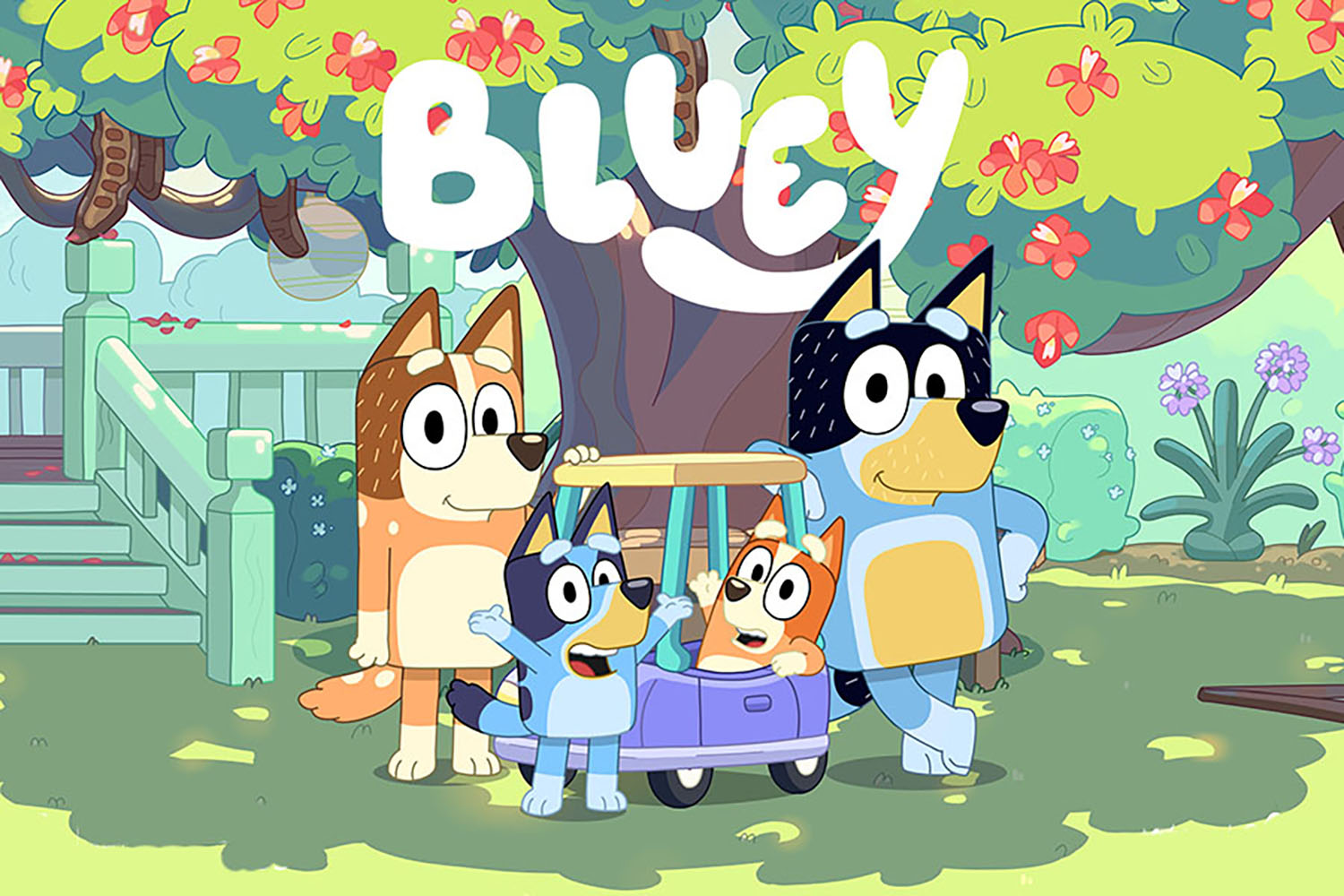
Bluey is an Australian children’s show that airs on Disney Plus. It features Bluey (a dog – Australian Blue Heeler), her little sister Bingo, Dad and Mum (Bandit and Chili). The show is simple – just reflecting the everyday life of this little family, and the ways that the parents and children interact. It is aimed at preschool age children, and they love it. Surprisingly, so do adults!

I listen to a podcast called the Filmcast. Hosts Jeff Cannata and Devindra Hardawar often rave about Bluey. Jeff has said “watching this show has made me a better parent.” (Brian Walsh agrees.) Even after hearing these recommendations, I didn’t watch it, because my youngest child is 12 – outside the Bluey target audience.

Then I read something about an episode (“The Show”) that indicates that Chili had experienced a miscarriage before Bluey was born. (There are also hints in an episode called the Bedroom, and infertility is reflected in the episode Onesies.) Bingo and Bluey are doing a silly show, acting out how their parents met and fell in love, and Bingo has a balloon under her shirt to act out Chill’s pregnancy. The balloon pops. The camera goes to Bandit and Chili who grab for each others’ hands with pained expressions. That’s all there is… a scene that may go over children’s heads, but has connected with and been meaningful for parents who have experienced a loss to see their story reflected. Michael Vaughn, a father of a Bluey Fan, said on TikTok: “One area where Bluey excels is making parents feel seen when they’re struggling.”

So, my family gave the show a try. My 12 year old likes it, but has other higher priorities for his screen time. On the other hand, my husband loves it. Bluey’s 8-minute episodes have become his go-to for “I’ve had a long day, and just need to do a little something relaxing before bed.” He’s not the only adult who feels this way, according to this WaPo article.

Why Many Adults Love Bluey

Bluey has a huge adult fan base, and these fans on Reddit explain why. Here I’ll just share a few that are about parenting and learning how to interact with children, but there are MANY reasons to love the show:

  • “I had no idea how to interact with kids prior to watching this show. But after watching Bluey, I could easily play games with my nephew…. We played keepy uppy but we also invented new games… And I had fun doing it.”
  • “I want to watch Bingo and Bluey have a beautiful childhood with great memories of their parents. It’s a way of healing my inner child. … AND if it helps us parent better, we are healing generational trauma, too.”
  • “Bandit is dad goals”
  • “Because you as a parent can relate 100% to every episode.”
  • “I’ve always been afraid of not being a good parent… The show has made me reevaluate being childfree. I just never thought about gentle parenting and seeing other people’s experience with it makes me think I could do it some day!”

This thread covers some of the moments that parents found most relatable:

  • “When Bandit buggers up the cake and just flops down onto the floor. He’s torn between bursting into tears and an almighty swearing fit, but at the same time … needing to continue being a positive role model.” “I feel so seen in that moment.
  • “Any time the kids go ‘Lets play______’ and Bandit says ‘oh no not ______'”
  • “when Bandit says he isn’t the best dad. I have those moments with my children … “
  • “Mum School! The end, when Bluey asks, ‘did I fail mum school?’ And Chili replies, ‘yeah. Ya did. That’s ok. We all fail mum school sometimes. We’ll just try again tomorrow.’ Never have I felt more validated as a mum. “

Parenting Lessons

Here are just some of the takeaways people have from watching Bluey. Clilck through to all the articles to read more.

Romper references specific episodes and what they learned:

  • Pool – always be prepared. (It takes effort to pack up all the stuff, but you’ll have more fun it you do.)
  • Bike – Let kids know it’s OK to fail.
  • Sticky Gecko – Kids move slowly – in their own time.
  • Copycat – We all grieve in our own way.
  • Baby Race – Don’t compare your child to other children or yourself to other parents. Just do the best you can do.

Bounty Parents shares these takeaways:

  • “Play is the powerhouse of child development… Bandit and Chilli are masters at maintaining connection with their daughters, squeezing precious moments of play between work and household tasks… playfulness is clearly beneficial for them as well.”
  • “Be the parent you want to be, even when you don’t feel like it… Bandit and Chilli frequently give a sigh and a skywards glance before playing yet another game… yet, being a fun and playful parent is clearly a core value for both of them. So they jump right in regardless.”
  • “Bandit and Chilli aren’t afraid to allow them experience the  consequences of their own actions… so children are learning a genuine and useful life lesson.”

Work. Play. Mommy. shares these lessons:

  • “I’m not alone. The creators of Bluey send subtle messages of understanding: messy cars, laundry on the floor, meal planning, convincing kids to eat.  Bluey taught me that I am not alone in these little parenting struggles.”
  • “Bluey helps me talk to my kids about some hard and complex subjects.  Bluey taught me to have some of these difficult conversations about feelings, loss, and even disappointment in words and scenarios that my children understand.”
  • “If you have ever watched Bluey, then you might have inwardly chastised yourself about not being quite as fun as Bandit, Bluey’s dad…. [But] Chili is the voice of reason in the father’s endless shenanigans.  She regularly tells Bluey and Bingo to comply with certain rules…. Chili even lets the girls know that she can’t stay to play when she needs to go to work… Chili reminded me that it is ok to be a mom who is not always fun.” (see also: “Bluey’s Mom Gives Me Permission to be an Introverted Parent.”)

Challenge Community learned to: get back to the basics, be present, say yes, be an active part of your child’s imagination, and unstructured play is important.

Love to Know shares these lessons, again listing episodes that encapsulate the lesson:

  • Takeaway: Childhood only happens once – let kids be kids.
  • Sheepdog: sometimes parents needs 20 minutes to themselves.
  • Bin Night and Omelette: step back and let your child do things themselves.
  • Library, Perfect, and Mini Bingo – our words and actions shape how our children see themselves.
  • We can tell our kids parenting isn’t easy and parents are far from perfect. … Bluey’s parents are upfront about their mistakes and uncertainties.

What I like about Bluey: it feels very realistic in the way it represents life with two young children. Yes, the parents are great in many ways, but they’re not perfect. They love their children dearly, and their children exhaust them at times. I do think it models parenting skills really well, and I encourage parents to check it out.

And the thing Bluey is best at? Modeling how to play with your child.

Playing the Games from Bluey

Several websites have listed out the games found in Bluey: the official website lists 10, Fatherly lists 19. Dad Fixes Everything has 21, and Bluey Wiki has them all. Here are a few to get you started.

  • When you just want to lie down: Hospital. You’re the patient – they examine, diagnose, and treat you. Or Pet Feet. While you lie in bed, they pretend your feet are pets and take care of them.
  • When you’ve got one balloon and need to keep kids busy for a while: Keepy Uppy. Don’t let the balloon hit the ground.
  • On a sunny day in the park: Shadowlands – you can only step where there is a shadow.
  • To teach musical notes: Magic Xylophone – when you play the right note, everyone freezes.
  • To motivate them to do work: The Claw. If they help with a task, they earn coins. You play a claw machine – sit with a collection of toys – they “insert” a coin, and use a joystick (any stick you hold in your hand) to direct the claw (your other hand) to pick up a toy.
  • To teach close observation skills. Fairies. They close their eyes, the “fairy” hides little objects around a room. They find them.
  • If you have an exercise ball: Raiders. Set up an obstacle course to get to a treasure, and then when they reach it, roll the ball at them.
  • When you want to talk to other grown-ups: Boomerang. You pretend to throw your child – they spin out and away, and eventually come back and you throw them again. You could also do ping-pong and bounce a child back and forth between you and another grown-up.
  • After Dark: Torch Mouse (aka Flashlight Mouse). They pretend to be a cat and try to catch the flashlight beam or laser pointer.
  • Fruitbat – pretend to fall asleep reading a bedtime story.
  • Favorite Thing: At the end of the day, each person takes turns sharing their favorite thing of the day.

Tip: the Bluey website has some fun crafts – some your kids can do and some for you (how to crochet a Grannies costume!)

More Resources:

If you want to learn more about parenting young kids, that’s what this site is all about! To get you started, here are a couple posts on topics mentioned above: Consequences, Play-Based Learning, It’s OK to make Mistakes, and Talking to Your Child about Hard Topics.

“No Thanks” is not a discipline tool

Sometimes I hear parents and teachers say “no thank you” to children to correct misbehavior – like when a child is shoving or making too much noise and the adult just says “no thank you” in the child’s general direction.

Not only do I find this odd (in my mind I would say “no thank you” to a child who offered me something I didn’t want, like a bite of their soggy cracker), it’s ineffective, because it does not explain to them what they should do instead. Children are left to deduce what might be wrong about what they’re doing and then make the jump to abstract thinking to figure out what else to do. That’s a big leap for three and four year olds!

It’s so much more effective to be explicit with your corrections. If a child is shoving into line, instead of no thank you, say “Jack, please go to the end of the line.” If they’re banging on the table, instead of no thank you, say “Kim, please stop banging, that hurts my ears.” It’s so much easier for a child to behave well when they’re told what that means. I really recommend this approach for adults.

Should kids use “no thank you” in this way?

I know a preschool teacher who taught her students to say “no thank you” when the other children did things they didn’t like. I think that could be appropriate for three year olds who do know when they don’t like something but may have a hard time articulating exactly what it is they don’t like or what they wish the other child would do instead. Saying no thank you is certainly better than shoving the other child. But by four years old, I like to work with kids on more clearly expressing themselves. I might say “Jeff, you look uncomfortable. Can you tell Kira ‘please don’t lean on me during group time – I like to have my own space.’” Or “Shri, you can say to Olga ‘please stop pushing me.’” It’s polite, assertive, and clearly expresses their preferences.

Learn more about how to tell children how to be good. https://gooddayswithkids.com/2014/01/29/telling-what-to-do/